Shapes and colors ricocheted around my consciousness as darkness slowly oozed over every effort to fight off drowsiness. I searched my watch for relief in the form of distance traveled, but it appeared stuck in time.
I finally spoke, “Jake…my mind isn’t right.”
Jake replied, “Do you think you can follow me?”
With only a shimmer of confidence, I uttered, “Yeah.”
“I’ll lead, just focus on my bib.”
I was about to enter the spirit world with little recollection of the next five hours. With 180-plus miles behind me, I was about to embark on my final journey.
The Start
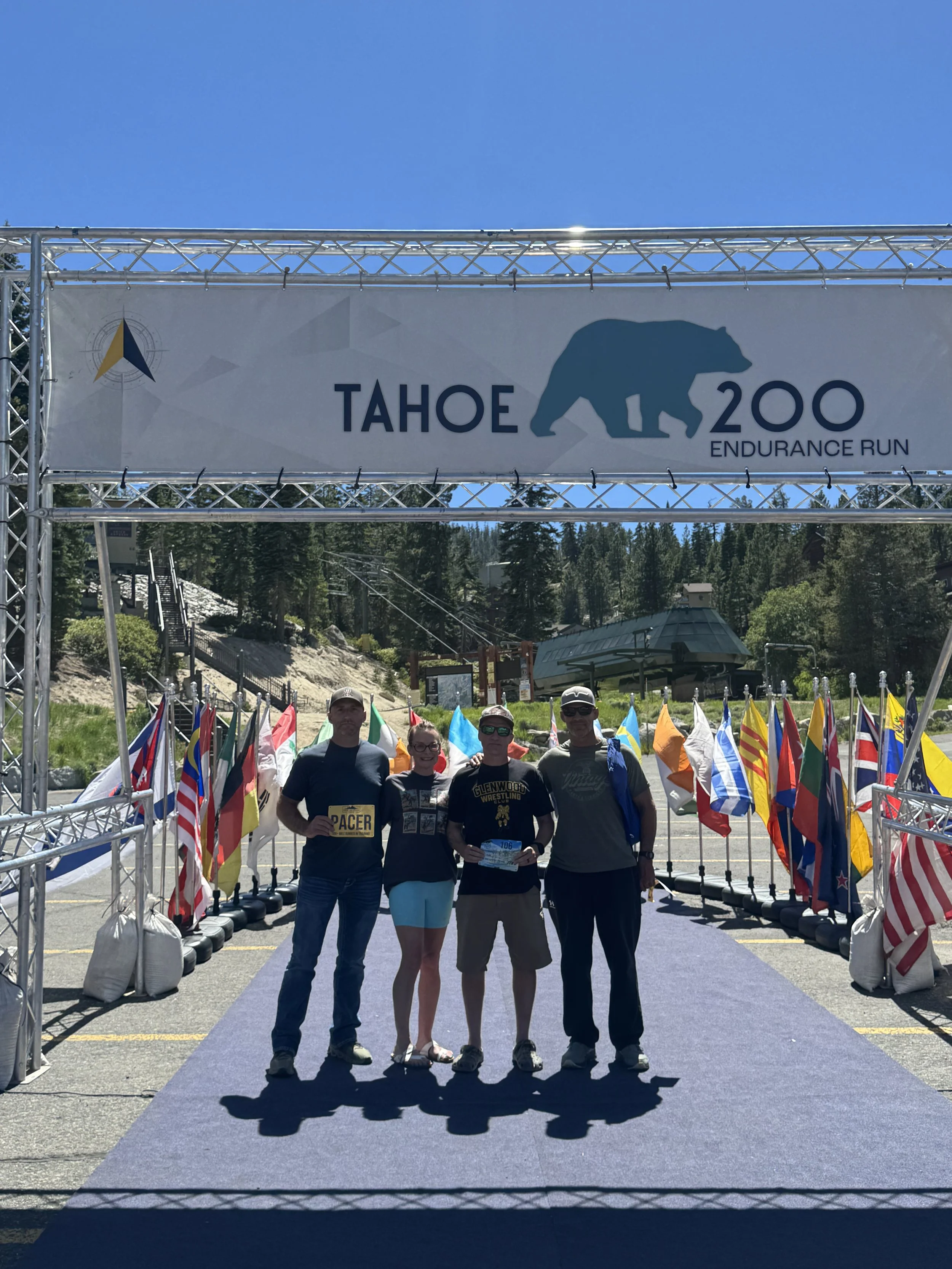
The Tahoe 200 is a 200-mile footrace through the Sierra Nevada mountains around Lake Tahoe. The trails are remote—and in some instances nonexistent—aid stations can be up to 20 miles apart, and runners climb more than 32,000 feet of elevation gain. Approximately 280 runners started the race. Only 183 finished.
The start line of a 200-mile ultramarathon is different. For twelve months, I had tried to answer questions like, “Am I training enough?” and “Am I tough enough to finish?” I knew there was only one way to find out. As the clock approached 9 a.m., a sense of relief coupled with an eerie nervousness lingered in the air. I was about to get my answer.
I remember Jake’s only advice: “I wouldn’t go out with the leaders.” In other words, start slow, be patient, and just go to work.
We all chanted the Destination Trail race creed: “If I get lost, hurt, or die…it’s my own damn fault.”
And we were off.
A Woman from Dubai and a Man from Hong Kong
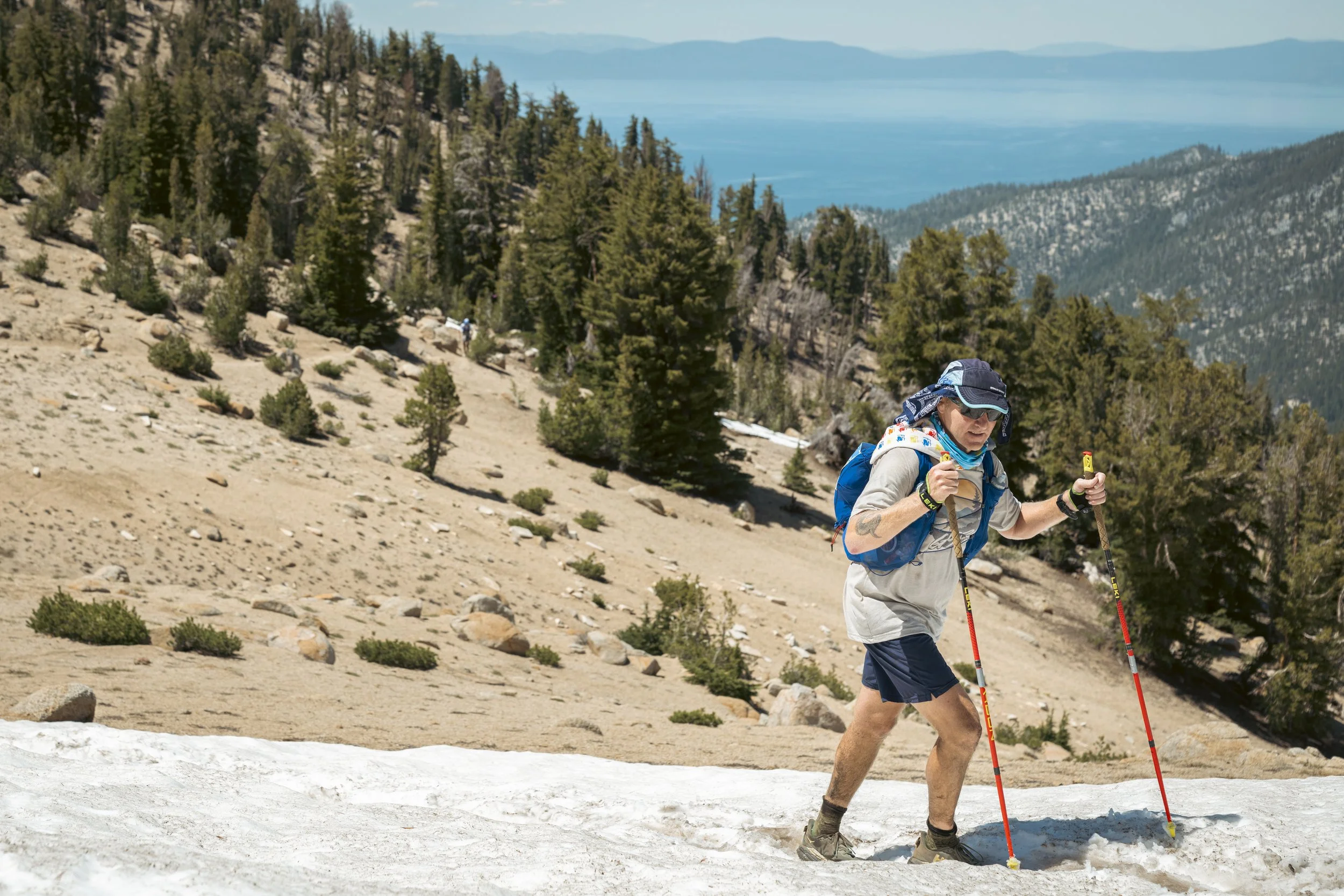
Nighttime set in on the first evening, and the cool air felt good. The course description warned of heavy vegetation, deadfall from a 2019 forest fire, a trail that sometimes vanished, and knee-deep water crossings. I scoffed at the description. How bad could it be? Mother Nature was about to show me.
I caught up with a group of runners who were having difficulty finding the trail. I scanned the darkness looking for a reflective dragon, but the stars were the only lights I could see. My phone pointed in a direction that felt counterintuitive to the terrain and vegetation, but I trusted it and followed what looked like a route previous runners had taken. The group hesitated as they double-checked my move, but I noticed a headlamp following closely. We were on the right path. That was when I met the man from Hong Kong.
We stuck together and eventually caught up with another group of runners having difficulty navigating. We joined forces. More headlamps searching for reflective ribbons and verifying maps paid off as we reached Wright Lakes Aid Station. I ate a breakfast burrito, loaded my pack with trail nutrition, and stood up to leave. That’s when the woman from Dubai asked if I wanted to “go out with her.” Not on a date, but to tackle the next section. I said sure, and the man from Hong Kong decided to join as well.
Looking back, we were an odd trio: three people from across the world joining together on a mountain with one common goal—to get to the next aid station. More downed trees, more water crossings, and the heat of the day cranked up with every step. But we stuck together, no one wanting to fall behind, and eventually we popped out at Loon Lake Aid Station. I gave them a nod and a fist bump, and we parted ways.
I think about Tina and Pawel a lot. Two people I will never see again. I don’t know their stories, yet they will always be part of mine.
Stephanie
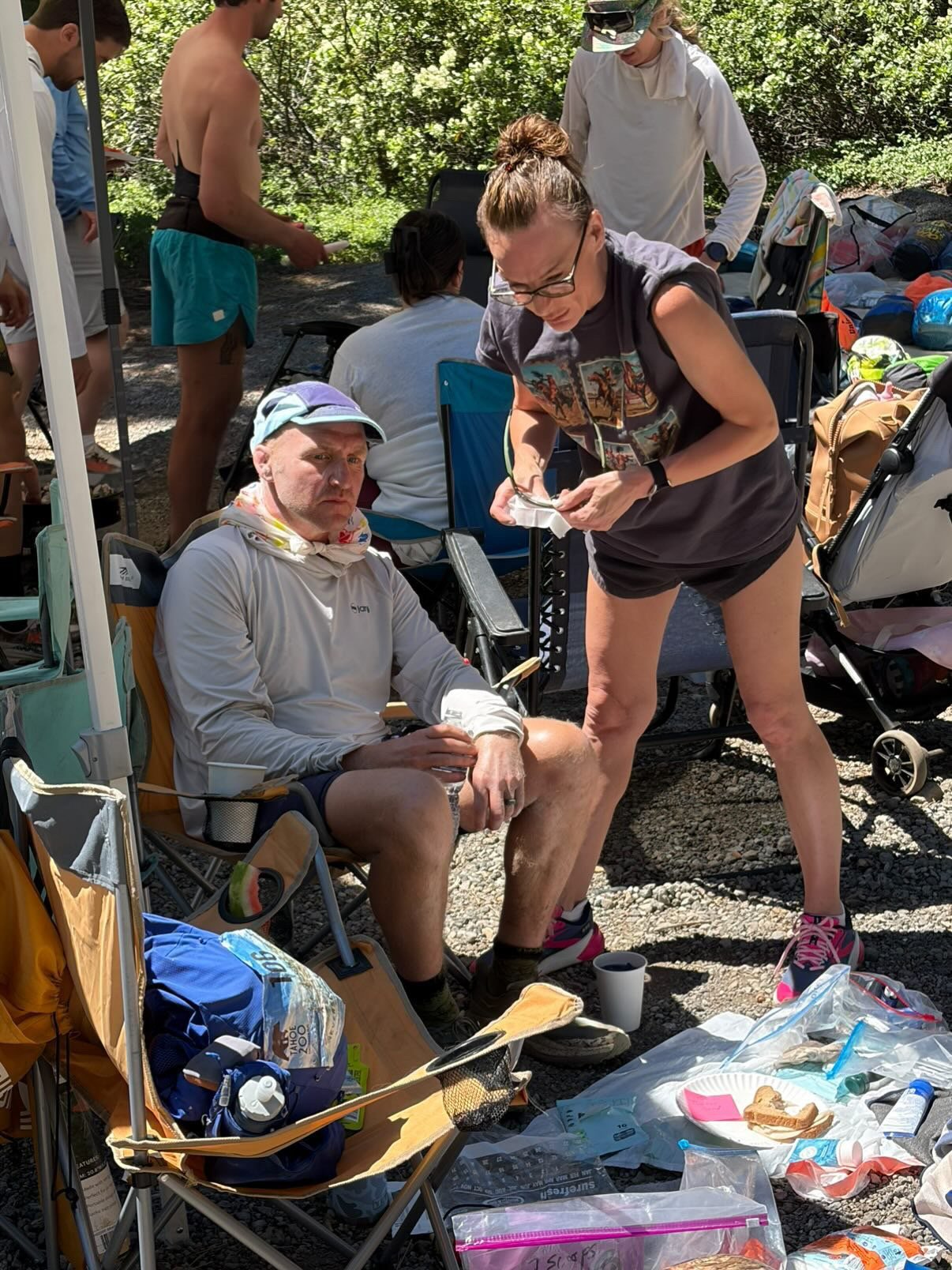
My crew was waiting for me at Loon Lake Aid Station at mile 87.6. Peeling off my socks exposed my torn and tattered feet. Water crossings had soaked my socks, and wet socks rubbing against gravel in my shoes created blisters. I had taped my toes before the race, and they looked pretty good, but they needed to be retaped and the blisters needed attention. Stephanie went to work.
There is a debate in the ultra world about whether your spouse should crew. The question is whether they have the capacity to see their loved one in a rough state, bandage them up, and send them out for more.
As I sat in the chair with Stephanie applying tape to my tattered toes, I couldn’t help but think about how far we had come. She was there for my first 50-mile run, two greenhorns without a clue. Now here we were in the thick of a 200-mile race, at least looking like we knew what we were doing. When the final strip of tape was applied, she helped me with my socks, gave me a kiss, and sent me on my way.
Change Your Horizon
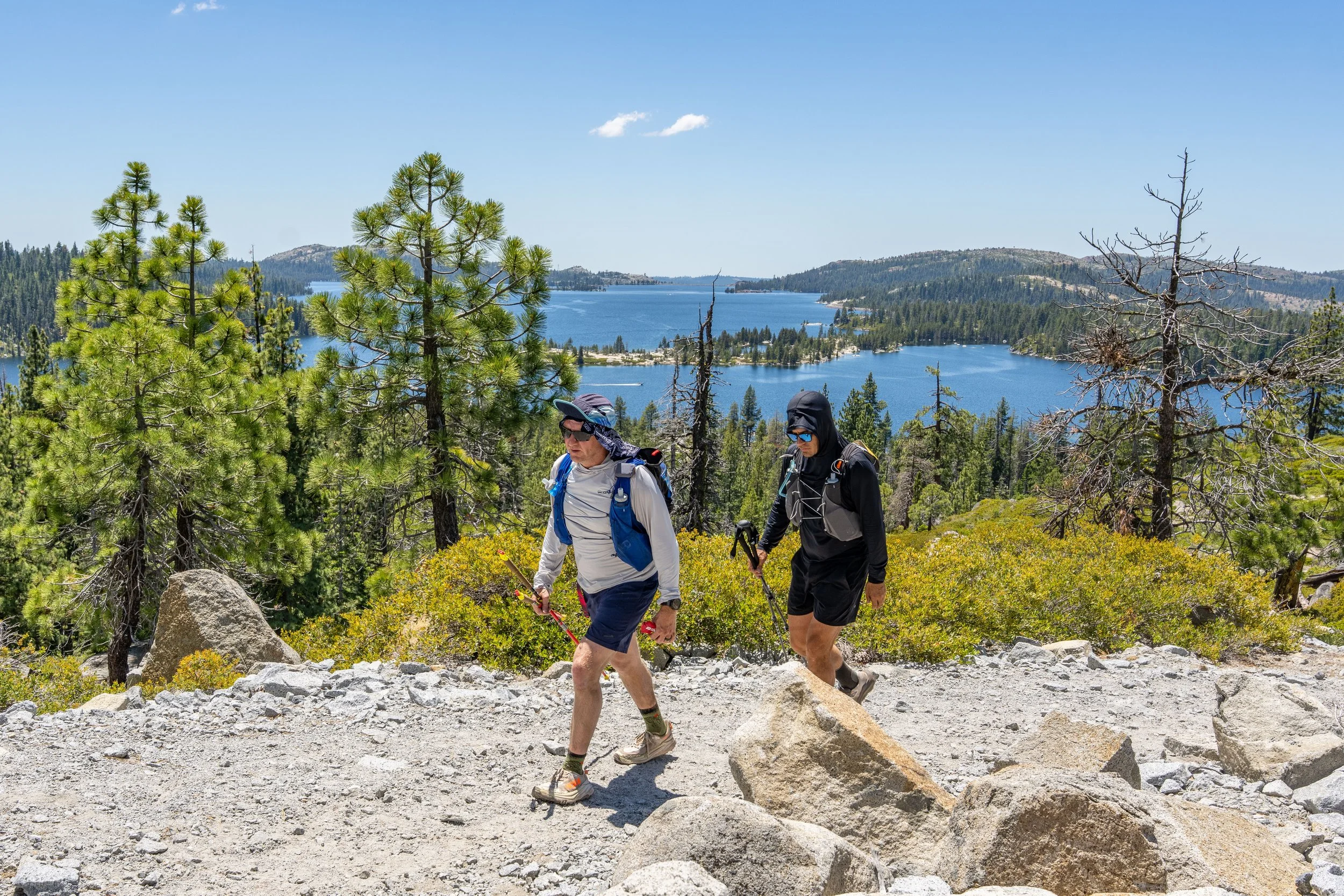
Leaving Loon Lake Aid Station, Mother Nature decided to start heating things up again. Cody joined me as a pacer, and we discussed a wide range of topics, talked shit to each other, and tried to solve the world’s problems.
Two milestones approached, and I’d be lying if I said I didn’t acknowledge them. The first was passing 100 miles. The second was hitting 107 miles, which was a new personal record for the farthest I had ever run. The Black Hills 100 is approximately 106 miles, so I knew every step from that point forward would be a new PR.
It was hot. We shared a long portion of trail with Jeeps, which kicked a fine dust into the air, and the lack of sleep started to take its toll mentally and physically. But I never thought about how many miles I had left. I’ve learned in life that if you think only about big goals or massive problems, the thought can become overwhelming. But if you break it down into smaller goals, focus on what is in front of you, and keep chipping away, it helps you mentally. So when I crossed 100 miles, I celebrated with Cody, but stayed focused on the next aid station, and carried that mentality throughout the race.
I’ve read and listened to podcasts about Navy SEALs and what makes the difference between the individuals who make it through Hell Week and the ones who quit. A common theme is that the people who think on the first day, “I have to do this until Friday,” never make it. The thought of that much time and that much physical and mental strain is too heavy. But the individuals who think, “I just have to make it through this iteration,” or “I just have to make it to breakfast,” are more likely to make it through.
When things get tough, change your horizon. I never focused on the fact that I had run 100 miles and still had 100 more to go. That is overwhelming. I focused on what I needed to do to get to the next aid station. When things got bad and the next aid station seemed daunting, I focused on the next step. I always had one more step in me. Then I focused on the next mile, then the next aid station, then repeated the process.
A First Ultramarathon
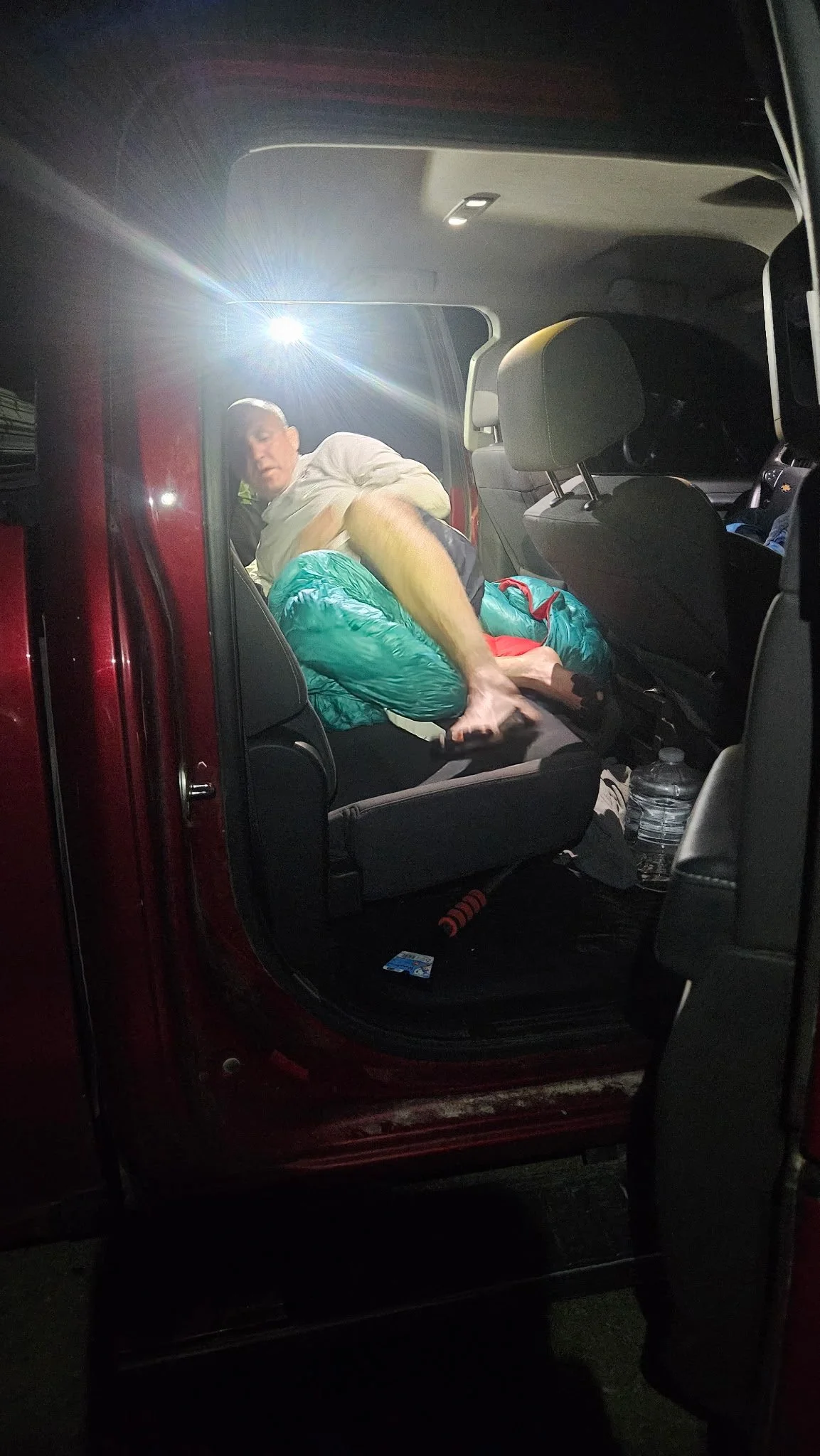
When I arrived at Tahoe City Aid Station, mild hallucinations were starting to take place. Plants looked like camping chairs, and as I approached them I’d think, Why is someone sitting in a chair way out here? Only when I got closer would I realize it was a plant. I had been awake for nearly 48 hours and told my crew to wake me up in 60 minutes. As I lay in the back of my Chevy Silverado, I remember lying on my side, my hip aching, and thinking, I’m never going to fall asleep. The next thing I knew, Jake was waking me up. I negotiated another 30 minutes, and then it was time to go. Brandon joined me and I remember seeing the sun rise for the third day.
One of my least favorite parts of planning for projects like the Tahoe 200 is asking buddies to come help pace. It’s like saying, “Hey, do you want to use your vacation time, buy a plane ticket, come run 35 to 45 miles, and help me achieve my goal?”
However, one thing I did right in life was build relationships with friends who will say, “Hell yeah.” And for that, I’m grateful.
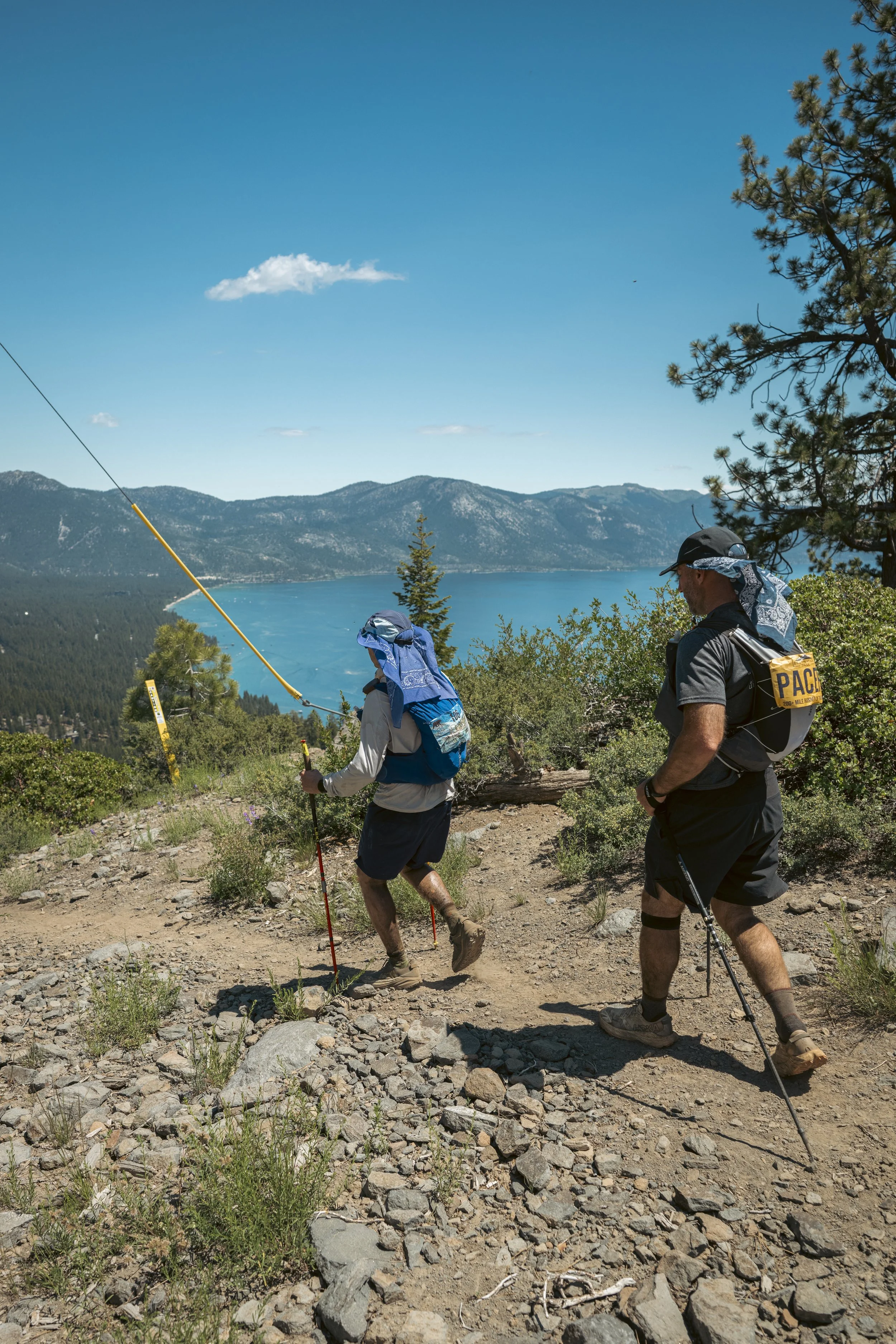
Cody and Jake jumped on board to pace right away, and I was prepared to make it work with them. But I wanted another pacer. Enter Brandon, my brother-in-law. I’d say he doesn’t fit the typical “trail runner” profile, but he’s tough, hardworking, and I knew he’d be ready to go. As Brandon and I descended a section of the course known as “Power Line,” which drops about 1,900 feet over a little more than a mile, I reflected on the time we spent together. We saw the sunrise over Lake Tahoe at the start of the third day, and in a couple of miles Brandon would have technically run his first ultramarathon. An ultramarathon is any distance farther than 26.2 miles, and that is a pretty special accomplishment.
I made a pact with my crew. I couldn’t promise money, and I couldn’t promise fame, but I did promise two things:
1. I will be ready to go.
2. It will be one hell of an adventure.
And it is the adventures I think about most.
The Dude You Want When Shit Hits the Fan
I’ll write a book about Jake someday, but to summarize: he’s the dude you want with you when shit hits the fan.
I remember waking up from my 90-minute nap and saying, “Jake, my stomach is upset.”
To which he replied, “You’re running 200 miles…it’s not going to feel great. If you throw up those eggs, I’ll get you some more.”
Or the time I came out of the spirit world and said “How much longer is this section?”
He pulled out his phone and showed me the map. I squinted and tried to make heads or tails of what I was looking at. He put it back in his pocket and said, “You still got a ways.”
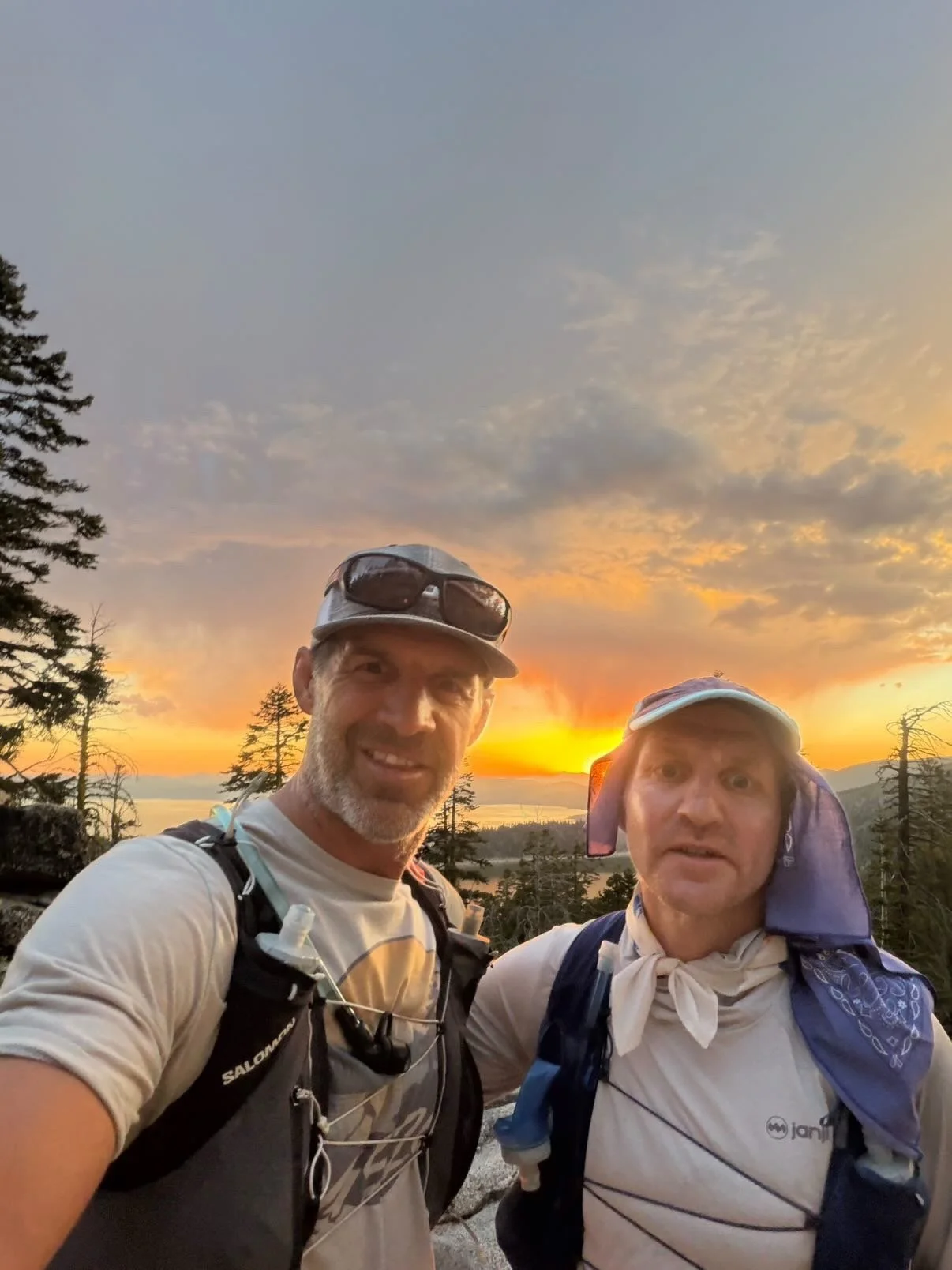
When I hit mile 175, the sun was setting over Lake Tahoe and I felt good. I remember thinking, Man, I kind of have this 200-mile racing thing figured out. Jake and I took some pictures, and we continued down the trail as nighttime settled in. That’s when things got squirrely.
The Good
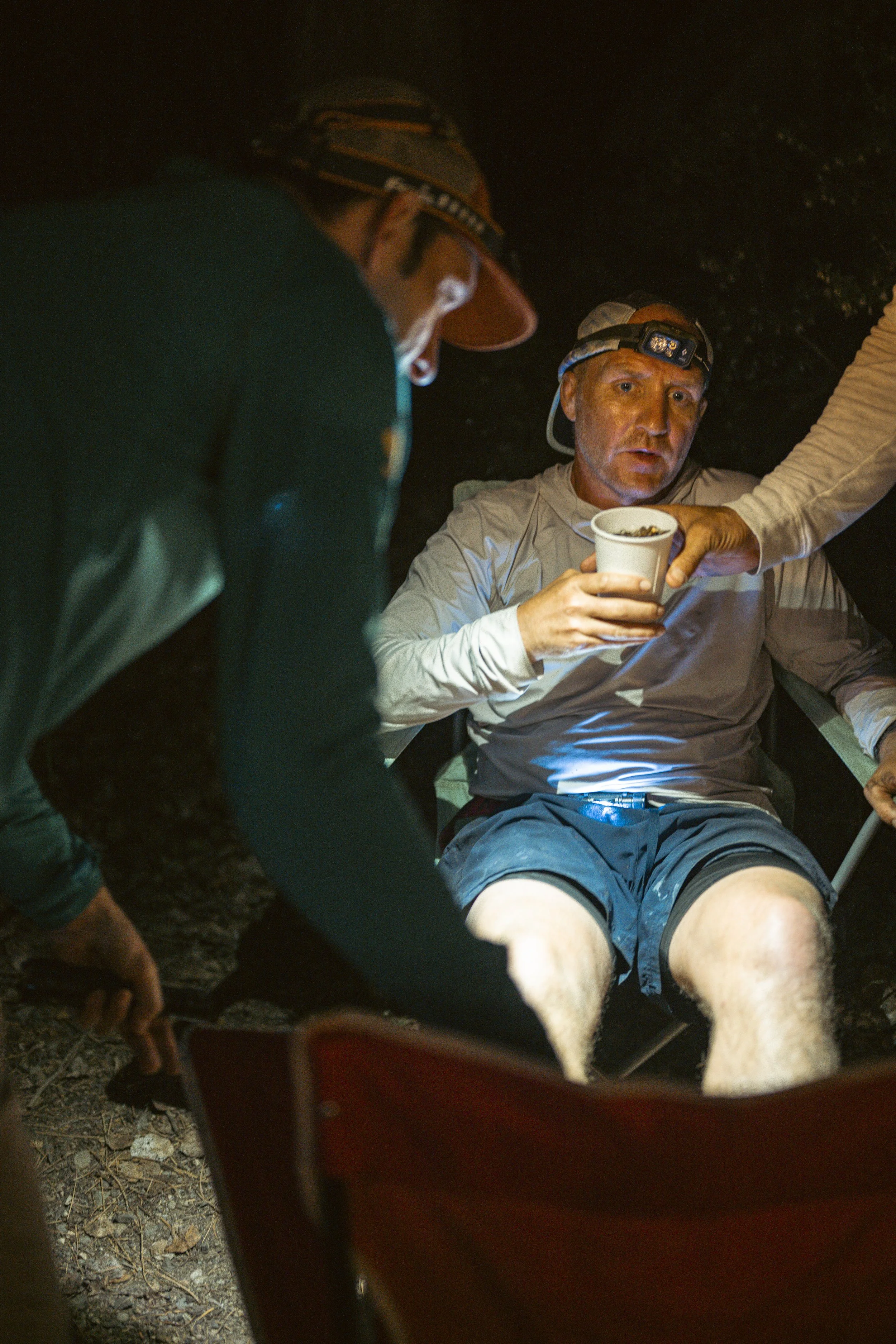
During the Tahoe 200, I hit low spots. Heat, vertical climbs, fatigued legs, and sleep deprivation started to snowball. When you are spiraling out of control and the miles left begin to close in with a feeling of helplessness, it can feel like it will never end. But I know it will pass. I go through my checklist: lower my heart rate, drink some water, eat some food, change my horizon.
From midnight to 5 am on that third night I was struggling. As I came in and out of sleep, I battled with my mind. Keep moving and get to the sunrise. I knew I was in a low, I just had to keep going.
The same applies to life. Your worst point in life is a finite point. That doesn’t mean it is easy when things are flying off the rails, but when you hit that point, you can start climbing out. The climb isn’t going to be easy, but recognizing that it is finite brings hope. Make a plan and start executing.
The Bad
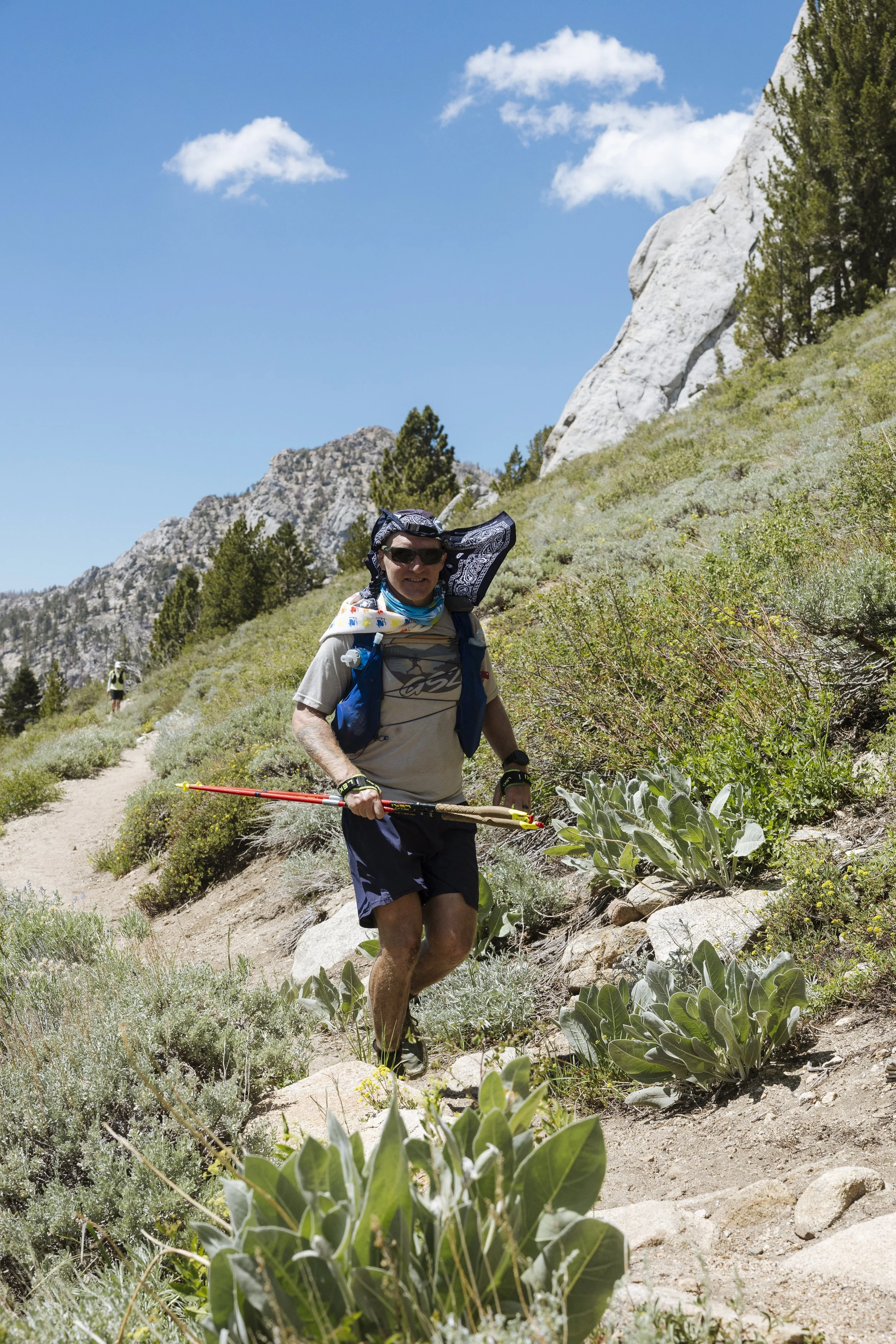
Unfortunately, if your lowest point in a race is finite, then the highest point is finite as well. The race goes fast. One moment you are standing at the start line, a place you have been anticipating for months. The next thing you know, you are crossing the finish line—high-fiving, taking pictures, feeling like a badass. But the adrenaline fades, your buddies leave, the Facebook “likes” dwindle, and you find yourself back in daily life.
I’m not saying it isn’t worth it. If you gave me the option to push a button and go back to the Tahoe 200 or take a million dollars, I’m pushing that button. But I wouldn’t go back to the finish. I’d go back to when I was in the thick of it: the unknown, walking the thin line between success and failure, battling with my mind, cracking jokes with Cody, Jake, and Brandon on the trail, and Stephanie bandaging me up and sending me back down the trail. Those moments cannot be bought. They are earned.
The Beautiful
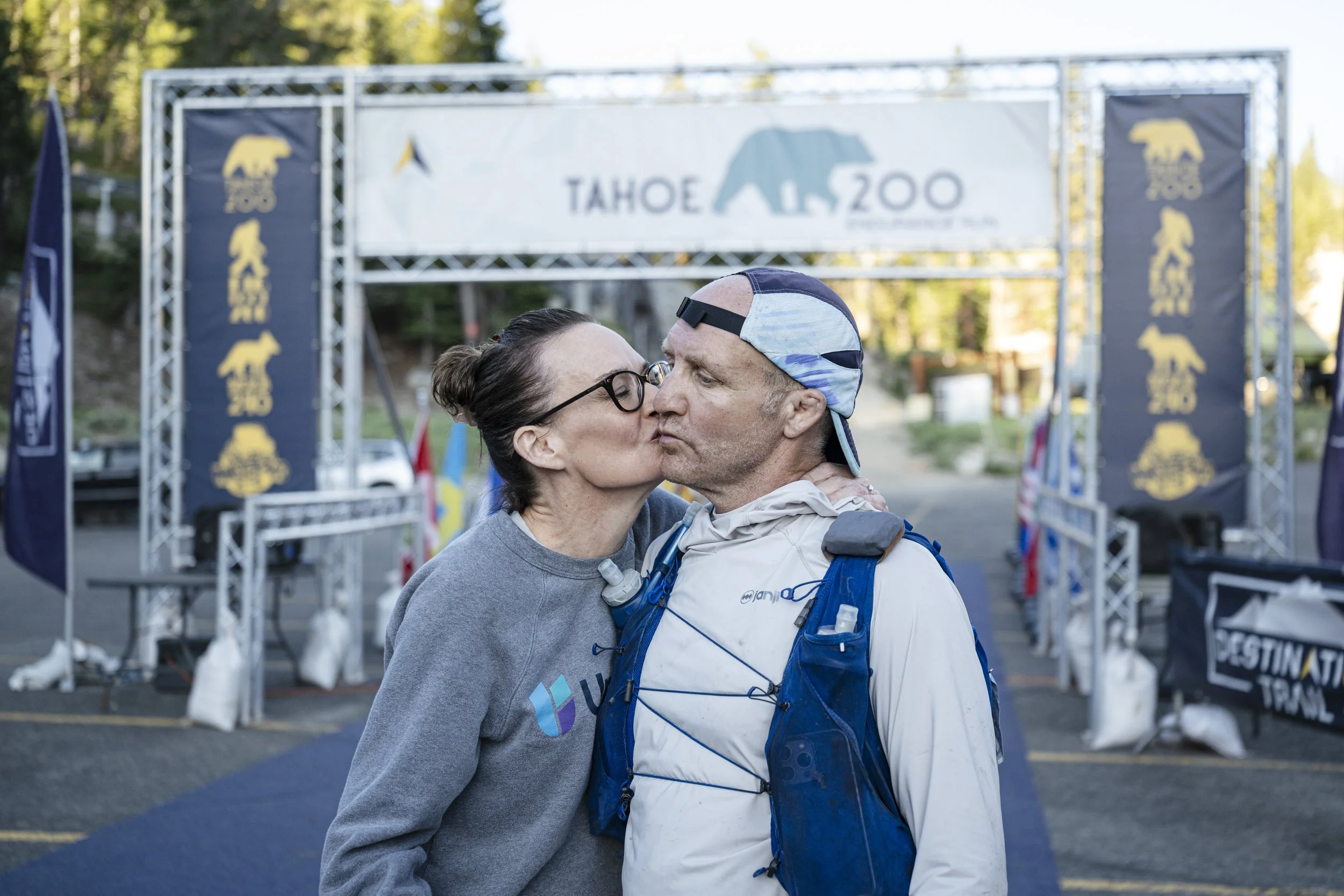
When I ran my first 50-mile race, the Flower Moon 50, I recorded a video afterward and said, “Time is the equalizer of all people.” I’ve thought a lot about that statement, and I stand by it. The Tahoe 200 has a running clock. When the race starts, competitors have 105 hours to complete the course. They can run, walk, take breaks, and sleep. But the clock never stops, and at 105 hours, you either did it or you didn’t. Either way, the time has passed.
The same is true in life. We are on a running clock. The only difference is that we don’t know how much time we have. Preparing for this race required sacrifices. I missed mornings with my grandkids, said no to friends, and only went fishing a handful of times. Sometimes I wonder if pursuing my goals is selfish and whether my time would be better spent elsewhere.
When I started my ultrarunning journey, I had a “rise and grind” mentality: push through the discomfort and grit it out. That mentality has changed. Now, when I wake up to go run, I think, It’s a good day to run. And if it is the last run of my life, I want to know I gave it hell.
When deciding how to spend your time, take the same approach. If it were the last time in your life, could you rest knowing you gave it hell?
The Finish
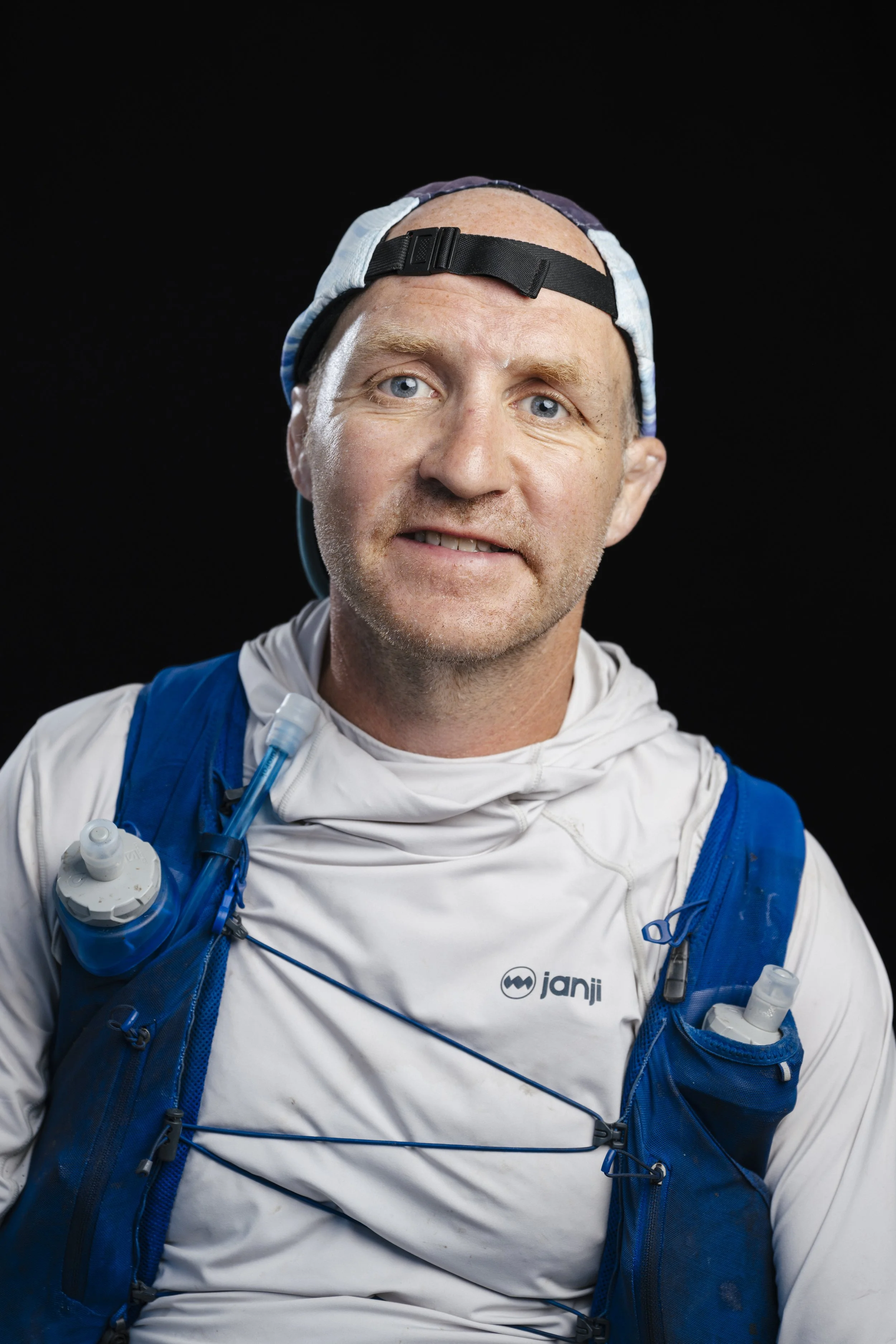
A crack of light shined through two mountain peaks. A bird chirped the first song of the morning. My mind came back into focus.
“Jake, I don’t remember anything.”
Jake said, “That’s okay. You made it through the night.”
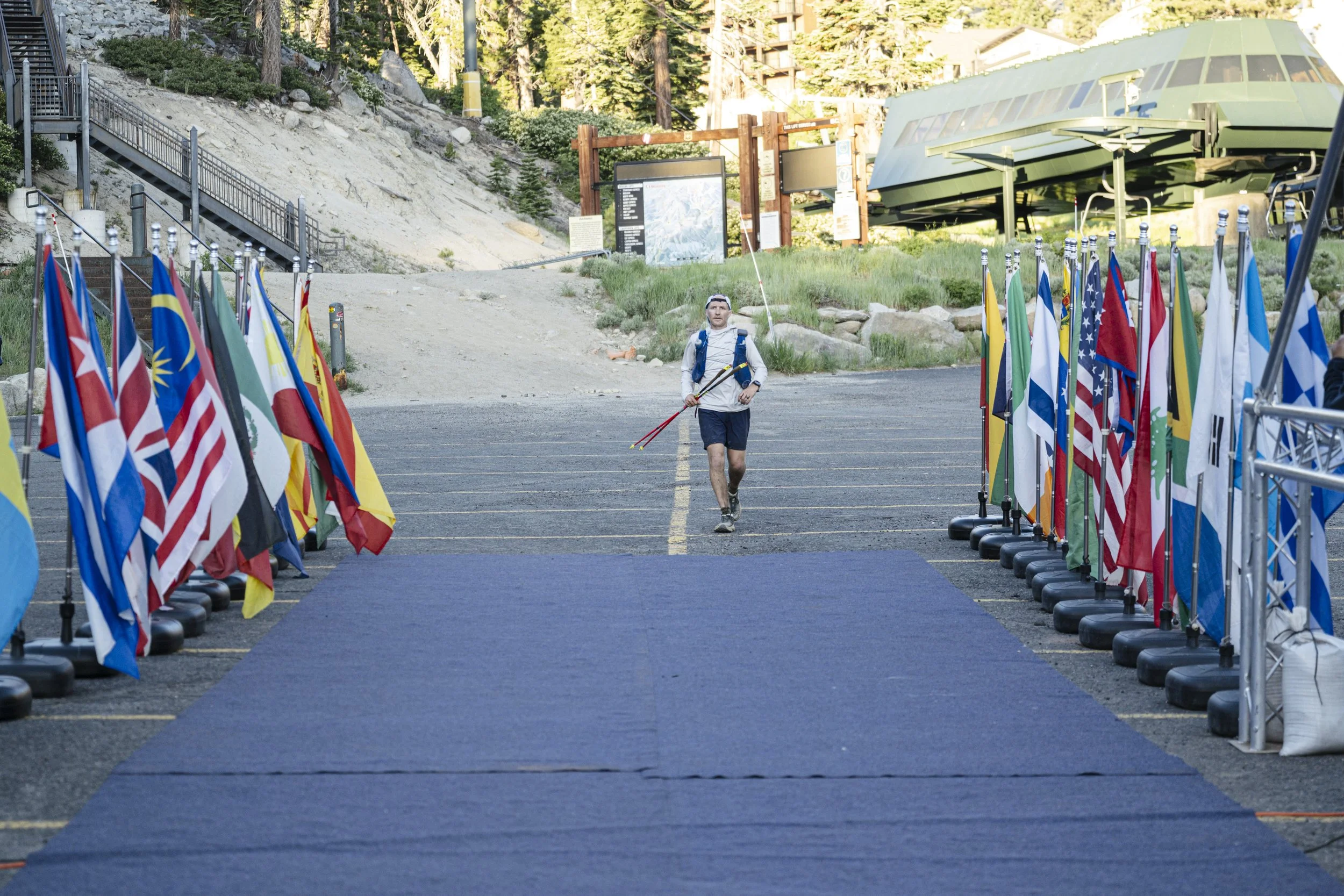
With five miles left, Jake said, “You take the lead.” When I made the final turn and started the descent to the finish, I was a changed man. The Tahoe 200 threw everything it had at me, and I gave everything I had. A journey of 200 miles started with a single step, and I finished mine in 69 hours and 15 minutes, good enough for 30th place.
Until next time…you’re going to have to earn it.